Taxonomy
- Common Name:
-
- The Texas Horned Lizard
- Domain:
-
- Eukarya
- Kingdom:
-
- Animalia
- Phylum:
-
- Chordata
- Class:
-
- Reptilia
- Order:
-
- Squamata
- Family:
-
- Phrynosomatidae
- Genus:
-
- Phrynosoma
- Species:
-
- Phrynosoma cornutum
Habitat
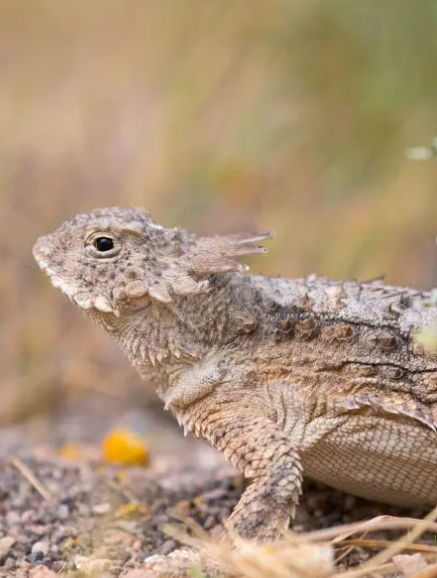
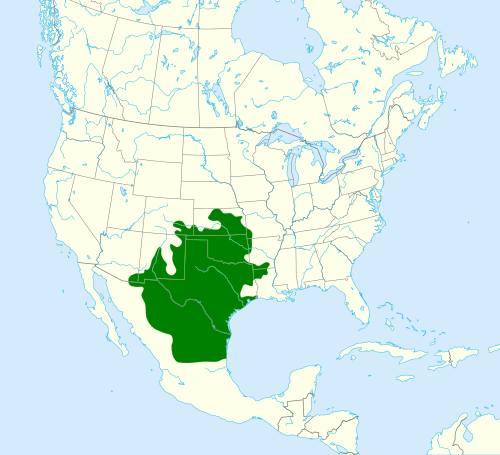
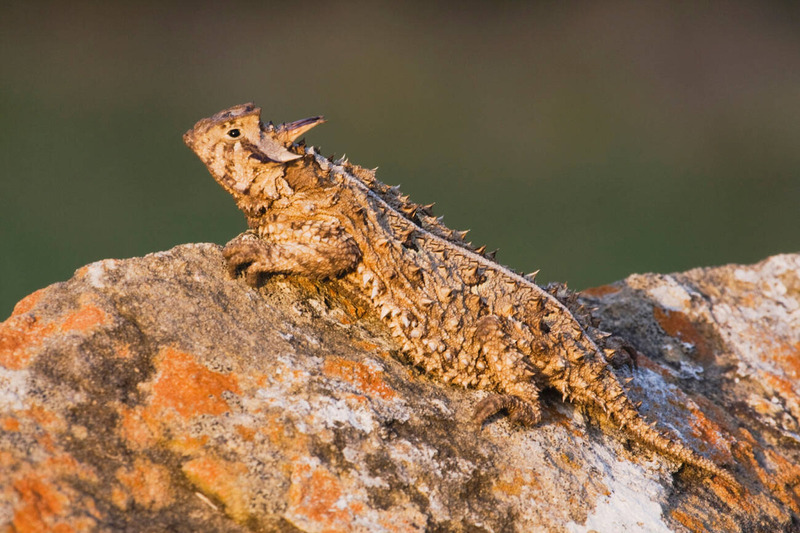
they live in grasslands, prairies, and dunes and spend much of there days sunbathing on side of roads or other open, rocky areas.
Traits
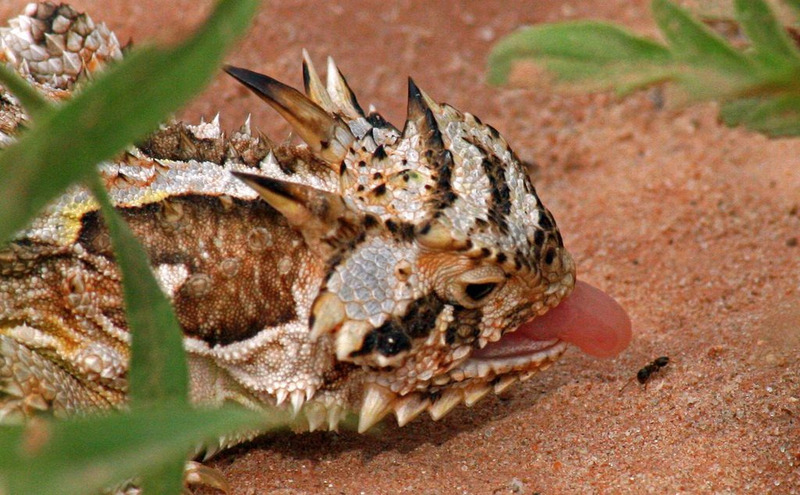
the texas horned lizard's head is covered in horns allowing it to better defend aganist predators. these hornes are potruding parts of the skull.
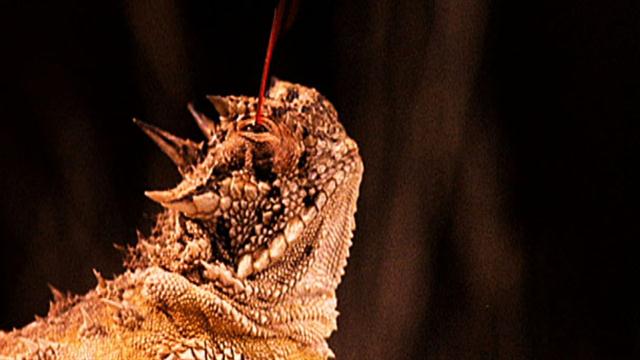
when all else fails the horned lizard will increase the blood pressure, bursting blood vessels on the rims of the eyes. the blood has a bad smell that will scare off coyotes but shows no effect on birds.
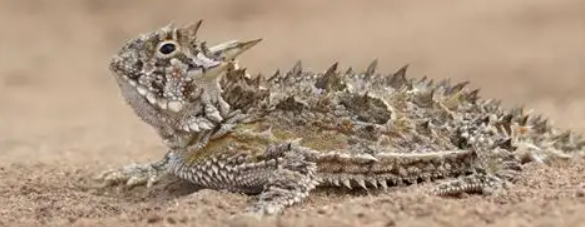
The texas horned lizard will hide from predators through camoflage by flattening their bodies against the ground.
Reproductive Stuffs
The texas horned lizard lives a solitary life and only meets with others to mate. they attract their mates through behavioral and chemical signals. males will cover more area during the mating season to intercept more females. they lay eggs, tipically around 14 - 37.
- Skeletal structure
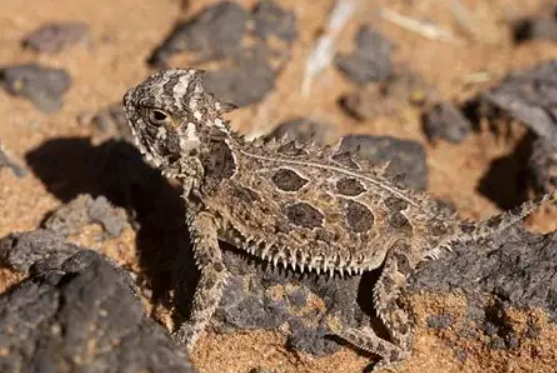
- the texas horned lizards skeleton is adorned with horns on the skull. they are part of the cranium andand true bone. it also has a wide dorso-ventrally flattened body with a single pari of occipal horns.
- Digestive system
- the texas horned lizard has a digestive system specialized for eating ants. it has an extra large stomach to consume large quantities and has developed a resistence to any any venoms. it capturess pray with a long sticky tong like frofs and toads.
- Respiratory system
- the texas horned lizard is adapted to handle arid conditions and to have a large surface area. this helps it support energy in the low-moisture habitiat of the texas horned lizard the lungs are efficient in oxygen intake and the compact heart pumps quickly which is important in the dry envirnment.
- Circulatory system
- the horned lizard has a circulatory system adapted to its arid area. it has sinuses surrounding its eyes which help to quickly increase blood pressuere in the sinuses allowing the lizard to expel a pressuered fin stream of blood from its eyes.
Activity Patterns
there activity peak shifts with the season being more active in the morning in june through july and more in the evening during april through may. the often spend time sunbathing in rocky areas and on the sides of roads. when they hunt they lay lew and press themselves against the ground. rather then go look for their prey, harvester ants, they lay and wait until their pray comes to them and they catch it.
Social Patterns
The texas horned lizard is a solitary creatrue that only meets others for the mating season. due to its solitude it is left with little competition to hunt harvester ants. they are only found in groups during the mating season and in prime sun basking spots but never form cordinated groups. they will continue to maintain there own hunting territory.
Food
the texas horned lizard Generaly eats harvester ants and because of this it has built up a resistance to any ant venom. it is also capable of eating other small animals and will also be found eating other arthropods such as beetles and spiders. it catches its prey by hiding and wait for the ants to come closer and then extending its sticky tong as if like a frog and catching the prey. they recive their water form dew plants normally as they avoid watery areas.